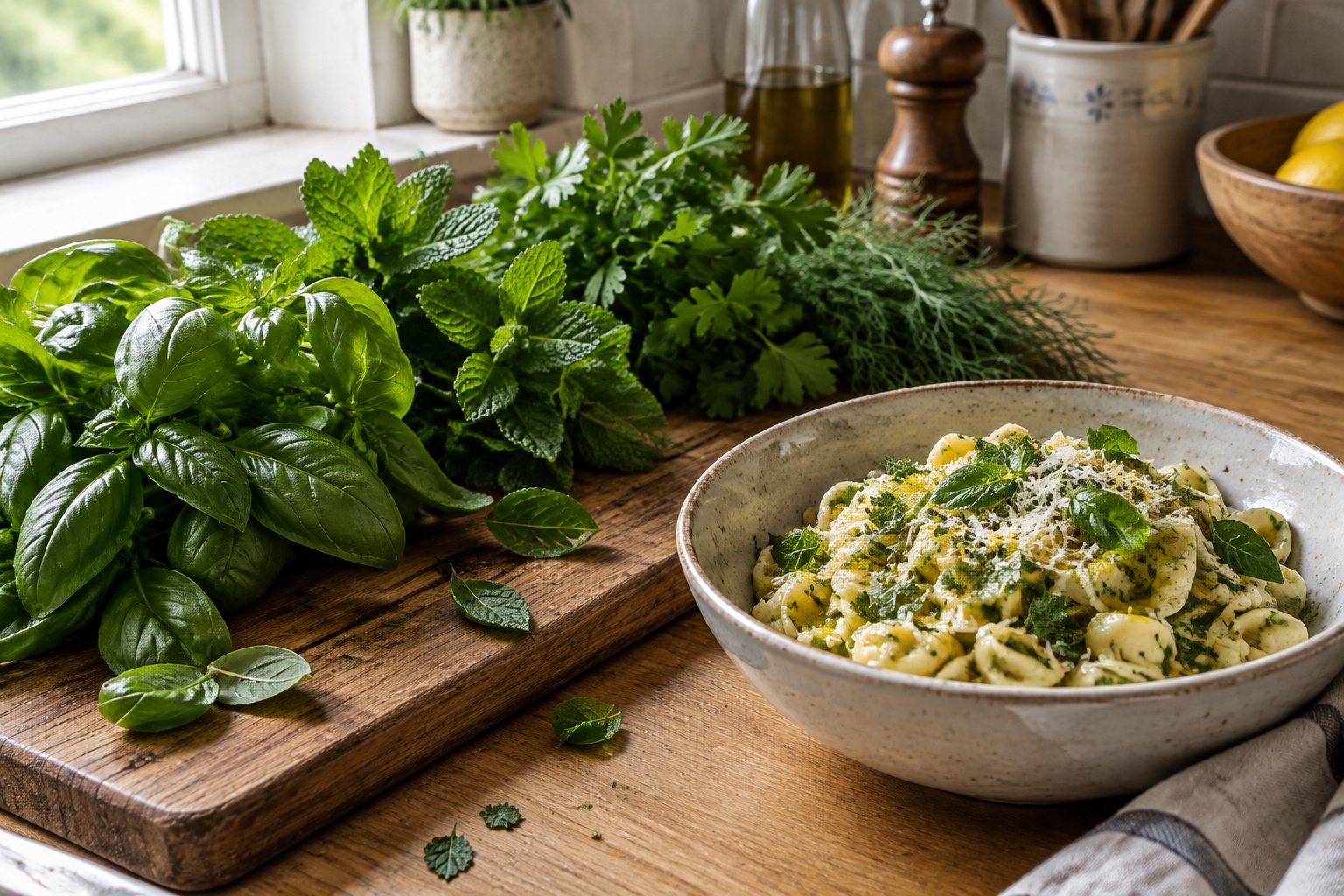
Fresh Herbs: The Last-Second Lift
A handful of green at the end makes food taste brighter and look finished. Here's which herb goes where and how to keep them alive past Tuesday.
By The MyKitchenQuest Kitchen · Updated
We may earn a commission when you buy through links on this page.
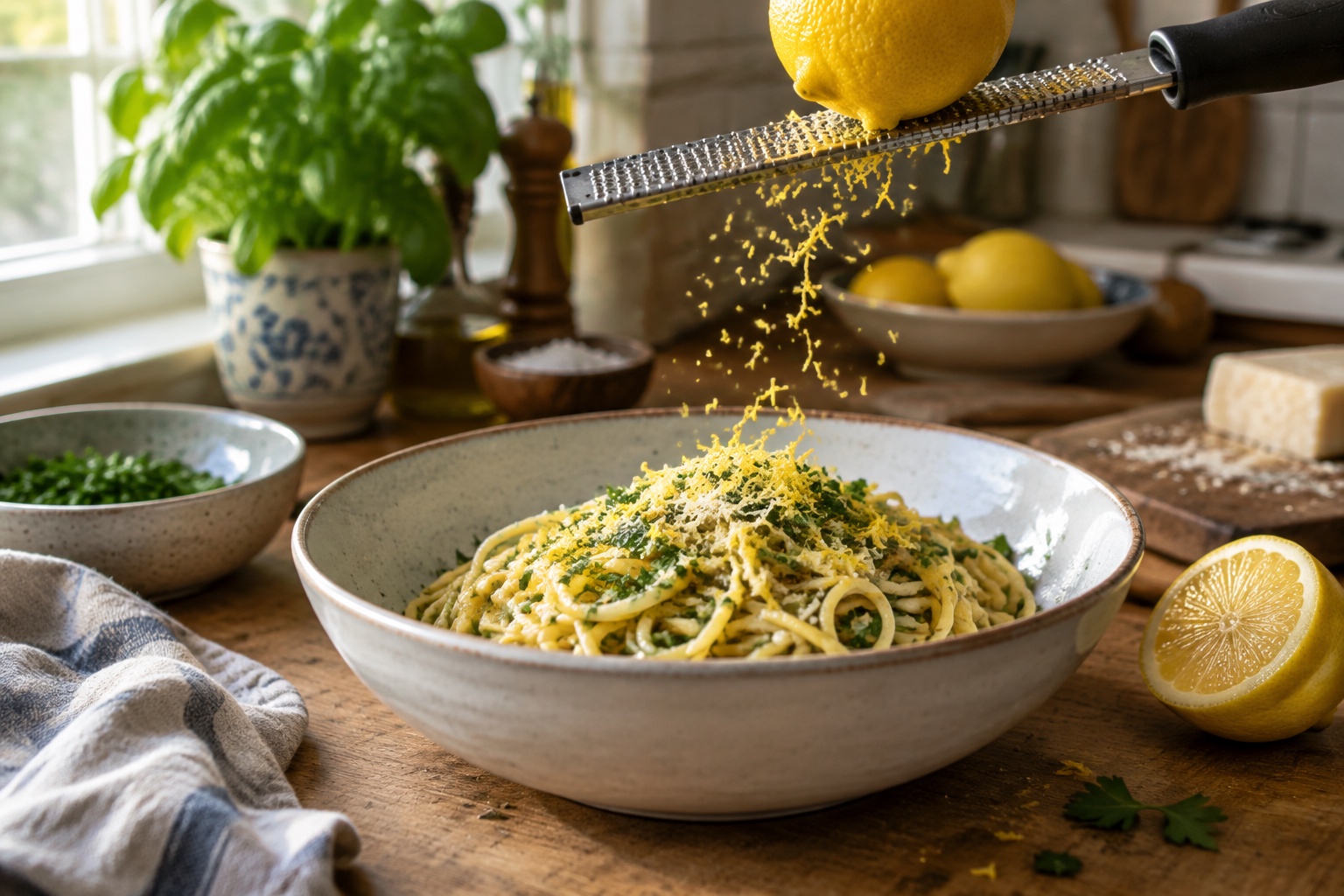
Two plates of the same pasta. One gets a handful of torn basil right before it hits the table. Which one looks like it came from a restaurant? Which one gets photographed?
Fresh herbs are the cheapest upgrade in your kitchen. Their aromatic oils are fragile, which is exactly why they hit so hard when they go on at the end.
The everyday five
- Basil: sweet with a peppery, faintly anise edge. Tomatoes, mozzarella, peaches, strawberries, pasta.
- Cilantro: bright and citrusy, and famously divisive; some people taste soap, and genetics appear to play a part. Lime, avocado, corn, fish, beans.
- Mint: cool and a little sweet. Peas, lamb, watermelon, cucumber, chocolate.
- Dill: grassy and delicate. Cucumber, yogurt, salmon, potatoes, eggs.
- Flat-leaf parsley: clean and peppery. Lemon, garlic, grilled meat, grain salads.
Pairings that never miss
Basil and tomato. Dill and yogurt. Mint and peas. Cilantro and lime. Rosemary and potatoes. Thyme and mushrooms.
Soft vs. woody
Soft herbs (the five above) bruise and fade with heat, so add them at the end or raw. Woody herbs (rosemary, thyme, sage, oregano) stand up to heat and go in early, in roasts, braises and marinades.
How to keep them alive
- Soft herbs: trim the stems, stand them in a jar with an inch of water, cover loosely with a bag and refrigerate. Basil is the exception; keep its jar on the counter, out of direct sun.
- Woody herbs: wrap loosely in a slightly damp paper towel, slide into a half-open bag, refrigerate.
- Washing: swish in a bowl of cold water and lift the herbs out so the grit stays behind. Dry well; wet leaves rot fast.
What's sitting in your fridge right now that a handful of green would turn into dinner?