What to Cook When Someone Is Grieving
Food that comforts without asking anything back: what to make, how to drop it off, and what to leave out.
By The MyKitchenQuest Kitchen · Updated
We may earn a commission when you buy through links on this page.
On this page
You heard the news, and the first thing you felt, right after the sadness, was the urge to do something. The second thing you felt was stuck. What do you even bring? Will it be too much? Will it just sit in their fridge?
It's a strange feeling, wanting to help and not knowing how. Here's the good news: the people who are grieving rarely remember what was in the dish. They remember that someone showed up with it.
What to make
Pick food that is familiar, soft-edged and easy to eat in small amounts at odd hours. Grief wrecks appetite and routine, so the best dishes are the ones someone can reheat one bowl at a time at 10 p.m.
- Chicken and rice soup. Gentle, filling, and it portions perfectly.
- A baked pasta like ziti or lasagna. It feeds visiting family and freezes well for the quiet week after everyone goes home.
- Breakfast muffins or a quick bread. Mornings are often the hardest part of the day, and nobody wants to make decisions before coffee.
- A big green salad with the dressing on the side, if you're delivering the same day. Something fresh feels good when the counter is full of casseroles.
If you can, ask one practical question through whoever is coordinating: "Any allergies or foods to avoid?" That's it. Don't ask them to choose a menu.
How to package it so nothing needs returning
The kindest dish is the one they never have to wash and give back.
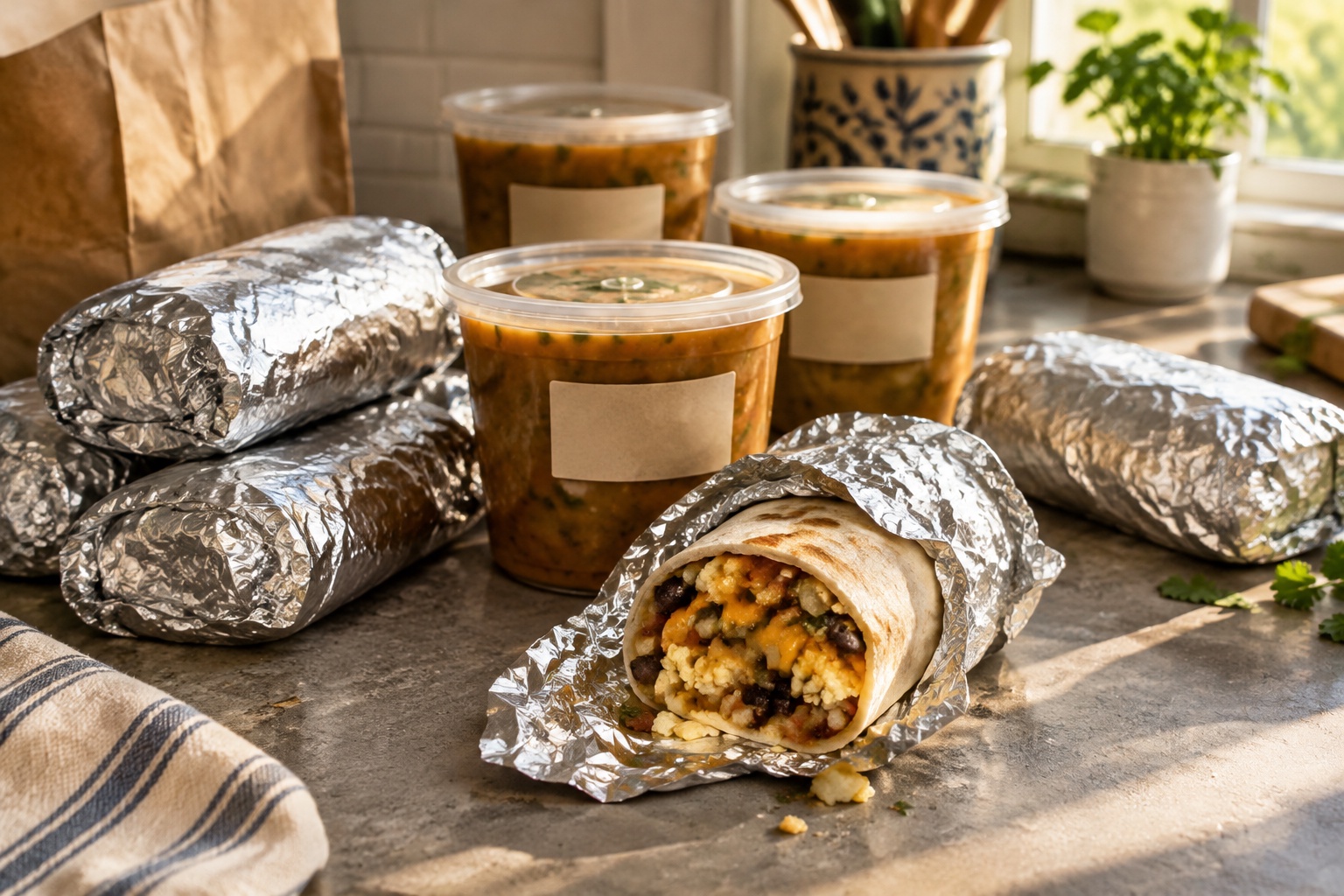
- Use disposable foil pans or freezer-safe containers you don't want returned.
- Label every container with the dish name, the date, the main ingredients (for allergies) and reheating directions.
- Keep the directions simple: "Oven at 350°F, covered, until hot all the way through," or "Microwave one bowl at a time, stirring halfway."
- Food safety matters more than usual when a fridge is overflowing: cooked food should be refrigerated within 2 hours, eaten within 3 to 4 days, or frozen for 3 to 4 months, and reheated to 165°F. (Source: USDA Food Safety and Inspection Service.)
What to leave out
- Anything that needs assembly or last-minute steps.
- Your good casserole dish. If you'd want it back, don't bring it.
- Huge single portions. A 9x13 that has to be eaten in three days becomes a burden. Split it into two smaller pans and freeze one.
- The unannounced visit. A quick text, "I'm dropping dinner on your porch at 5, no need to come to the door," gives them control on days when they have none.
A simple drop-off note
Tape it to the lid. Keep it short and ask for nothing back:
Thinking of you. Dinner is taken care of. No need to reply.
Then go home. The note does the rest.
What happens if you wait until you know the perfect thing to bring?
Most people who mean to help wait for the right moment, and the right moment passes. The food doesn't have to be perfect. It has to arrive.